HICLOVER Incinerator Waste Incinerator: Technical Solutions for Modern Waste Disposal Challenges
# Understanding Waste Incinerators: Core Principles and Applications
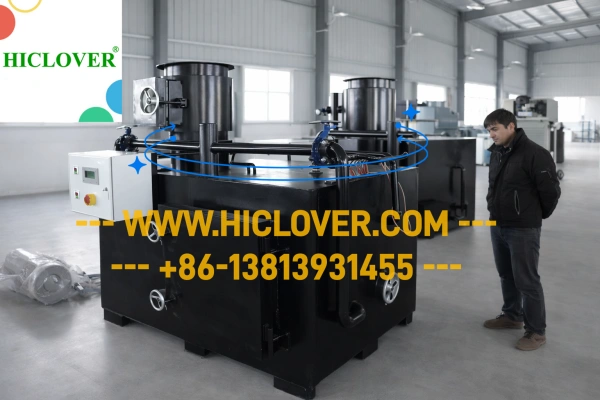
**Waste incinerators** serve as critical infrastructure for safe and efficient disposal of medical, laboratory, and industrial waste. The **HICLOVER incinerator** operates on **dual chamber combustion principles**, achieving temperatures exceeding 850°C in the primary chamber and maintaining 1100°C in the secondary chamber to ensure complete destruction of pathogens and hazardous compounds. This temperature range meets WHO guidelines for medical waste treatment and complies with EU emission framework standards.
Modern **small incinerator** designs incorporate advanced PLC control systems that monitor combustion parameters in real-time. The automation extends to oxygen regulation, fuel injection, and ash removal processes. For laboratories handling sensitive materials, **laboratory incinerator** models feature precise temperature modulation capabilities with ±5°C accuracy.
Key technical specifications include: – Retention time exceeding 2 seconds in secondary chamber – Volumetric capacity from 5kg/hr to 500kg/hr – Multi-fuel capability (diesel, LPG, natural gas) – Optional wet or dry scrubber systems for emission control
The [HICLOVER engineering team](www.hiclover.com/) has developed containerized solutions that combine these technical features with modular deployment advantages for remote locations.
## Incinerator Control Systems: Automation and Operational Safety
Modern **incinerator control** systems represent a significant advancement over traditional manual operation. HICLOVER’s PLC-based architecture integrates several critical functions:
1. **Combustion monitoring**: Continuous tracking of chamber temperatures, oxygen levels, and burn rates 2. **Safety interlocks**: Automatic shutdown protocols for abnormal pressure or temperature conditions 3. **Data logging**: Comprehensive record-keeping for regulatory compliance and process optimization
The control interface typically includes: – Touchscreen HMI with password-protected access levels – Remote monitoring capability via Ethernet or GSM – Alarm notification system for critical parameters
For operations in crisis zones or humanitarian camps, these automated features prove particularly valuable. They reduce dependency on highly trained personnel while maintaining consistent **medical incinerator operating temperature standards**. The system’s diagnostic functions also facilitate preventive maintenance, extending equipment lifespan in challenging environments.
## Technical Specifications: Comparing Incinerator Types and Configurations
### Fixed vs. Containerized Systems
Fixed installation incinerators suit permanent healthcare facilities with consistent waste volumes. Their **dual combustion chambers** typically feature refractory brick lining rated for continuous operation at 1200°C. In contrast, HICLOVER’s containerized **small incinerator** solutions offer:
– Rapid deployment (72-hour setup time) – Integrated pollution control systems – Mobility between sites – Compliance with international shipping regulations
### Emission Control Technologies
The choice between **dry scrubber vs wet scrubber** systems depends on several factors:
| Parameter | Dry Scrubber | Wet Scrubber | |——————|———————–|———————–| | Water Usage | None | 50-100L/hr | | Maintenance | Quarterly | Monthly | | Acid Gas Removal | 85-90% efficiency | 95-98% efficiency | | Particulate Control | Bag filters | Venturi scrubbers |
For operations prioritizing **carbon emission reduction**, the dry system often proves more sustainable. However, facilities handling halogenated compounds may require wet scrubbing’s superior acid gas neutralization.
## Global Applications and Industry-Specific Solutions
HICLOVER incinerators serve diverse sectors with specialized requirements:
1. **Healthcare**: Models with automatic loading systems for sharps and anatomical waste 2. **Laboratories**: Units with precise temperature zones for different waste categories 3. **Remote industrial camps**: Containerized systems with diesel/LPG dual-fuel capability 4. **Municipalities**: High-capacity units with energy recovery options
In developing regions facing **global infectious disease preparedness** challenges, the company’s mobile solutions enable rapid response capability. The plug-and-play design incorporates all necessary components – from fuel storage to ash collection – within ISO-standard shipping containers.
For technical professionals researching specific configurations, relevant search queries might include: [https://www.google.com/search?q=medical+waste+incinerator+temperature+retention+time](www.google.com/search?q=medical+waste+incinerator+temperature+retention+time)
## Engineering and Manufacturing Capabilities
HICLOVER’s factory-direct approach ensures several competitive advantages in **waste incinerators** production:
– Vertical integration of combustion chamber fabrication – In-house PLC programming and testing – Customizable chamber volumes (50L to 10m³) – Full emission testing before shipment
The manufacturing process emphasizes: – Robotic welding for chamber integrity – ISO 9001-certified quality control – Pressure testing of all fuel systems – 72-hour continuous burn-in testing
This engineering rigor supports the company’s **stable supply chain** even during periods of global disruption. For procurement specialists evaluating suppliers, these factors significantly reduce project risk compared to trading companies with outsourced production.
## Regulatory Compliance and Environmental Considerations
Modern incineration systems must navigate complex regulatory landscapes while addressing **ESG compliance** pressures. HICLOVER designs incorporate multiple compliance features:
1. **Emission controls**: Meets EU 2010/75/EU and US EPA 40 CFR Part 60 standards 2. **Waste categorization**: Appropriate treatment for WHO Class B infectious waste 3. **Energy efficiency**: Optional heat recovery systems for cogeneration applications
The company maintains an active testing program to verify performance against evolving standards. Recent enhancements include improved particulate filtration and real-time emission monitoring interfaces that simplify compliance reporting.
## Operational Considerations for Procurement Teams
When specifying **waste incinerators**, decision-makers should evaluate:
1. **Throughput requirements**: Matching daily waste volume to chamber capacity 2. **Fuel availability**: Local infrastructure for diesel, LPG, or natural gas supply 3. **Maintenance access**: Availability of technical support in the deployment region 4. **Future expansion**: Modular systems that allow capacity increases
HICLOVER’s engineering team provides detailed feasibility studies during the specification phase. This includes site-specific recommendations for: – Foundation requirements – Utility connections – Operator training programs – Spare parts inventory planning
The company’s global service network supports installations across 60+ countries, with regional technical hubs maintaining critical spare parts inventories.
## Emerging Trends in Thermal Waste Treatment
The incineration sector continues evolving in response to several **advanced technology trends**:
1. **Digital twin technology**: Virtual commissioning and performance simulation 2. **Alternative fuels**: Adaptation for biofuels and hydrogen mixtures 3. **AI-assisted optimization**: Machine learning for combustion efficiency 4. **Material recovery**: Integration with ash processing systems
HICLOVER’s R&D pipeline includes developments in plasma-assisted gasification and hybrid systems combining thermal and chemical treatment. These innovations aim to address growing pressure for **carbon emission reduction** while maintaining the reliability expected from industrial-scale equipment.
For procurement teams evaluating options, these forward-looking capabilities become increasingly relevant as waste treatment regulations tighten globally. The company’s active participation in industry working groups ensures its solutions anticipate rather than react to regulatory changes.