
Precision Engineering and Global Compliance: A Comparative Analysis of HICLOVER Waste Incinerators
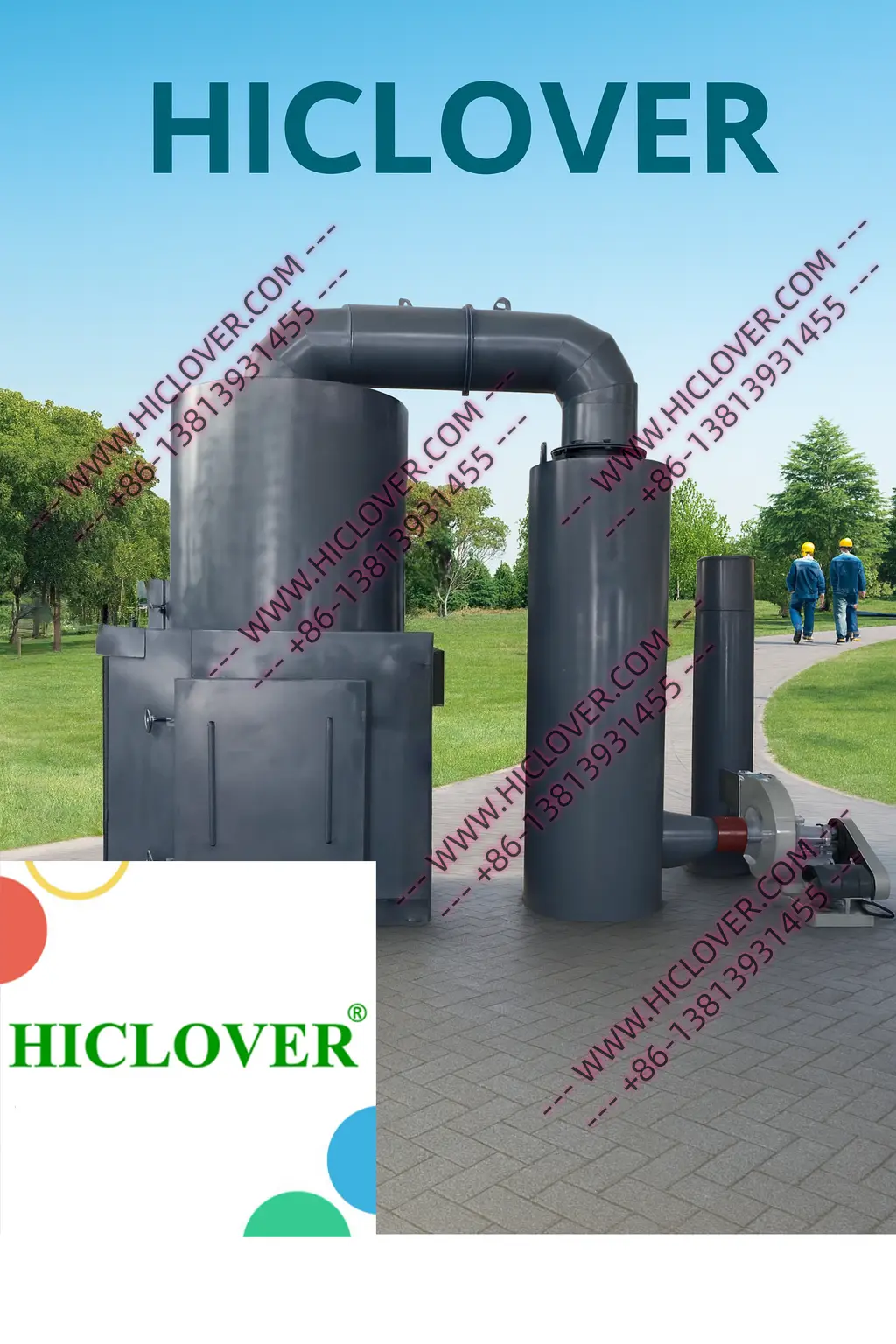
In today’s rapidly evolving industrial landscape, efficient and regulatory-compliant waste management solutions are paramount. Advanced waste incinerators have emerged as reliable systems that meet stringent industrial standards, including temperature ranges between 850°C and 1100°C for optimal combustion. This analysis provides a technical reference for procurement managers and decision makers, integrating the necessity for incinerator training and support alongside considerations for incinerator for incinerator for waste recovery and incinerator for varied applications. Notably, adherence to medical incinerator operating temperature standards underscores the engineering reliability that advanced platforms offer. Incorporating a balanced mix of automated controls, dual combustion design features, and rigorous emission mechanisms, the HICLOVER waste incinerator sets a benchmark in both industrial performance and regulatory compliance.
Technical Insights into Waste Incinerators
Technical excellence is a critical requirement for industrial systems that process hazardous and general waste alike. Modern waste incinerators are engineered with a strong emphasis on combustion principles and thermal efficiency, where precise temperatures are maintained to ensure complete oxidation of wastes. These systems usually operate within a designed temperature band—commonly between 850°C and 1100°C—to minimize residual waste while meeting WHO and EU emission frameworks. The design often includes a dual-chamber configuration, where primary and secondary combustion chambers work in tandem. The secondary chamber, in particular, plays a pivotal role in ensuring that particulate matter and dioxins are reduced to minimal levels through extended high-temperature retention, which is crucial for both environmental safety and human health.
The combustion process itself is grounded in rigorous industrial standards. Engineers ensure that the system’s thermal retention supports complete combustion, thereby reducing the emissions of unburnt hydrocarbons and other potentially hazardous compounds. The dual combustion chamber mechanism is typically engineered with an emphasis on high-temperature retention importance; this enables extended contact time for gases, allowing for more effective pollutant decomposition. Furthermore, these incinerators integrate automatic sensors linked to programmable logic controllers (PLC) that regulate temperature and oxygen levels with high precision. In the context of global infectious disease preparedness and crisis zones & humanitarian camps, maintaining such precise operating conditions is essential. Additionally, carbon emission reduction pressure and rising ESG compliance demands have driven advancements in dry and wet scrubber technologies. These technologies are optimized not only for efficiency in smoke filtration but also for operational resilience under fluctuating load conditions.
Industry stakeholders must be aware that standards such as medical incinerator operating temperature standards often serve as benchmarks for design and operation. Incorporating these technological and regulatory frameworks, modern incinerators provide both technical efficiency and compliance assurance. High-precision temperature control, advanced PLC automation, and robust material durability combine to facilitate continuous operation even in remote mining or oil camps, affirming the system’s design credentials in hazardous and variable environments.
Comparative Analysis of Incinerator Technologies
Fixed vs Containerized Modular Systems
The current market offers a diverse range of waste incinerators, and the two prominent configurations are fixed installations and containerized modular systems. Fixed incinerators are typically integrated into an existing facility’s infrastructure and feature robust permanent foundations and auxiliary systems that ensure a controlled operating environment. However, the market increasingly demands flexibility, which is where containerized modular systems excel. HICLOVER’s containerized modular systems are engineered for ease of transport, rapid deployment, and scalability. These systems provide consistent operational performance in remote mining/oil camps and decentralized waste management facilities, and they are particularly suited for areas with stringent environmental controls. The mobile plug-and-play design enables on-site deployment with minimal installation time while offering the same high-caliber engineering as traditional fixed systems.
The containerized platforms offer the additional advantage of factory manufacturing capability and stable supply chain management. This allows for consistent product quality and enhanced engineering experience over trading companies. The mobility factor plays a crucial role, particularly in crisis zones and humanitarian camps, where rapid response is paramount. In industrial applications, the modular design not only allows for quick scaling of capacity but also facilitates easier maintenance and incinerator training and support. This design advantage is central to reducing overall costs when compared to fixed installations that might require significant customization and on-site construction.
Further, containerized systems embody remote site suitability through robust external housings that protect sensitive components from volatile climatic influences. The design employs advanced materials for heat resistance and ensures compliance with environmental regulations such as the EU emission frameworks. The ease of customization in chamber volume and fuel options (ranging from diesel and LPG to natural gas) makes these systems an ideal candidate for varied industrial scenarios—from urban medical waste management facilities to rugged remote mining camps. Such adaptability, accompanied by digital automation in industrial equipment, reinforces the technological edge of containerized waste incinerators in modern waste recovery applications.
PLC Automation vs Manual Control
Automation presents a transformative advantage in modern incinerator design. PLC automation provides a level of precision and consistency that is challenging to guarantee with manual control systems. HICLOVER waste incinerators exemplify this evolution by integrating state-of-the-art PLC automation. With automated temperature control, oxygen regulation, and emission monitoring, these systems deliver exceptional operational accuracy and safety. The control system continuously fine-tunes combustion conditions, thus minimizing human error and ensuring operational consistency. The digital automation also facilitates remote monitoring, which is beneficial for sites located in crisis zones or remote mining/oil camps.
Conversely, manual control systems, although simpler in design, may be cost-effective for operations where operational intensity is low. They, however, often lack the technological redundancies and advanced safety protocols embedded in automated systems. The implementation of PLC-controlled systems facilitates not only better operating efficiencies but also provides robust diagnostic capabilities for predictive maintenance, significantly reducing downtime. Procurement managers find that the clear benefits in terms of operational resilience, systematic performance, and enhanced compliance with global standards outweigh the potential cost benefits of manual systems. Additionally, such advanced automated controls align well with current trends in digital automation in industrial equipment, reducing the margin for error while offering real-time adjustments based on sensor feedback.
An important aspect of this technological comparison is also seen in smoke filtration efficiency. Systems equipped with either dry scrubber or wet scrubber technologies provide the necessary filtration to reduce harmful emissions. While dry scrubbers offer simplicity and lower water usage, wet scrubbers tend to deliver superior particulate removal, albeit at higher operational expenses. This decision often hinges on the specific regulatory environment and operational priorities such as carbon emission reduction pressure and ESG compliance requirements. For example, applications in urban areas or near sensitive ecologies might prefer wet scrubbers for their enhanced treatment performance.
A detailed technical explanation of these systems can be reviewed further on the HICLOVER website at https://www.hiclover.com/, where comprehensive product specifications and engineering details are available. Moreover, professionals seeking further technical standards may refer to industry benchmarks such as those in this Google search for detailed information on medical incinerator secondary chamber temperature standard.
Commercial and Transactional Perspectives
Market dynamics today demand waste incineration systems that are flexible, cost-effective, and compliant with evolving global standards. With over 16 years of engineering experience, HICLOVER has continuously refined its technology to meet both commercial and transactional requirements of global customers. The company distinguishes itself through factory direct supply of advanced waste incinerators, enabling a streamlined, stable supply chain that bypasses the uncertainties often associated with trading companies. When evaluating cost-effectiveness alongside engineering reliability, the integration of multi-fuel capabilities (including diesel, LPG, and natural gas) and dual combustion chambers becomes a significant asset. This versatility enables users to optimize fuel consumption while upholding strict environmental and regulatory standards.
Customizable chamber volume is another noteworthy aspect that gives HICLOVER an edge. This feature facilitates tailored waste treatment solutions that align precisely with local regulatory mandates and specific waste management needs. The robust engineering of these systems provides the technical capacity to operate effectively under varying operational loads, catering to market segments that extend from large urban centers to remote, decentralized waste management setups. In scenarios such as crisis zones and humanitarian camps, the mobile plug-and-play design significantly reduces installation time, ensuring prompt waste management in emergency situations. Furthermore, critical incinerator training and support provided by HICLOVER ensures that even complex systems can be operated with high efficiency and safety.
The transactional appeal is further enhanced by the company’s global export capability, which supports the implementation of waste incinerators in regions facing severe environmental constraints or those under pressure from stringent carbon emission reduction measures. The incinerator for waste recovery solutions are designed with high engineering reliability and incorporate digital automation features that offer not only consistent performance but also reduced operator dependency. Additionally, these systems are strategically built for remote sites, making them especially relevant for decentralized waste management initiatives and remote mining/oil camps where onsite technical support might be limited.
Factory manufacturing capability is central to HICLOVER’s market positioning. By controlling production from inception to final assembly, HICLOVER ensures that every unit delivered is manufactured to the highest industrial standards. This vertically integrated approach guarantees supply chain resilience, a crucial factor that is particularly valuable in volatile market conditions. For instance, during global infectious disease outbreaks when waste management is escalated in medical settings, the ability to rapidly supply and customize waste incinerator systems mitigates risks associated with supply disruptions. Procurement managers can thus take confidence in a system that not only meets technical and regulatory benchmarks but also delivers consistent support throughout its lifecycle.
The engineering strength of HICLOVER waste incinerators is further validated by its extensive portfolio in handling varied waste streams. The dual-chamber incinerators, optional wet or dry scrubbers, and advanced PLC control systems collectively meet both environmental benchmarks and industry demands for operational predictability. With a focus on technological adaptation to digital automation and enhanced monitoring, these systems accurately respond to variations in waste composition and combustion dynamics. This level of precision is central to creating a safe, reliable, and cost-efficient waste management solution that addresses both current market challenges and future sustainable practices.
For procurement professionals evaluating incinerator for applications across diverse sectors, HICLOVER offers a proposition that balances engineering complexity with ease of operation and installation. The market benefits from a reliable source capable of factory-direct manufacture and global distribution support. When technical demands intersect with urgent scenarios such as global infectious disease preparedness or emergency waste management deployments in crisis zones, the robust design and automated control features ensure operational continuity. Simultaneously, the emphasis on incinerator training and support provides the necessary knowledge transfer to facility personnel, thus ensuring safe and effective system management. This blend of innovation, technical depth, and operational reliability makes HICLOVER a formidable player in today’s competitive waste management market.
The customization options available further allow for enhanced performance adjustments and capacity scalability. Engineering teams working with HICLOVER can specify modifications ranging from chamber volume alterations to the integration of additional emission control devices. The flexibility to choose between dry scrubbers, which offer reduced water consumption, or wet scrubbers, which have higher particulate removal efficacy, allows clients to tailor the incinerators precisely for local environmental regulations. Such customization potential is particularly attractive for projects that necessitate a quick turnaround, high adaptability, and strict adherence to industry guidelines.
The transactional strength of HICLOVER’s offerings can be seen through their commitment to stable production, consistent quality checks, and a dedicated support system that extends beyond delivery. Clients benefit from a seamless transition from procurement through installation to post-sales service, underpinned by significant engineering experience and a robust supply chain foundation. Amid increasing trends in energy recovery systems and digital automation in industrial equipment, HICLOVER continues to innovate with solutions that are not only technologically robust but also commercially